IKEA Circularity Strategy Case
Enhancing the Buy-Back Program to Drive a 30% Increase in Customer Participation
Project Overview
As part of a four-person consulting team, I analyzed IKEA’s existing circular initiatives and developed a strategic recommendation to help the brand increase customer participation in sustainable behaviors by 30%. Our final proposal centered on expanding and strengthening IKEA’s Buy-back Program, which directly addresses customer pain points around trust, convenience, and perceived cost barriers.
This project involved structured problem-solving, synthesizing qualitative and quantitative insights, financial modeling, customer-journey redesign, and developing a phased implementation roadmap.
The Challenge
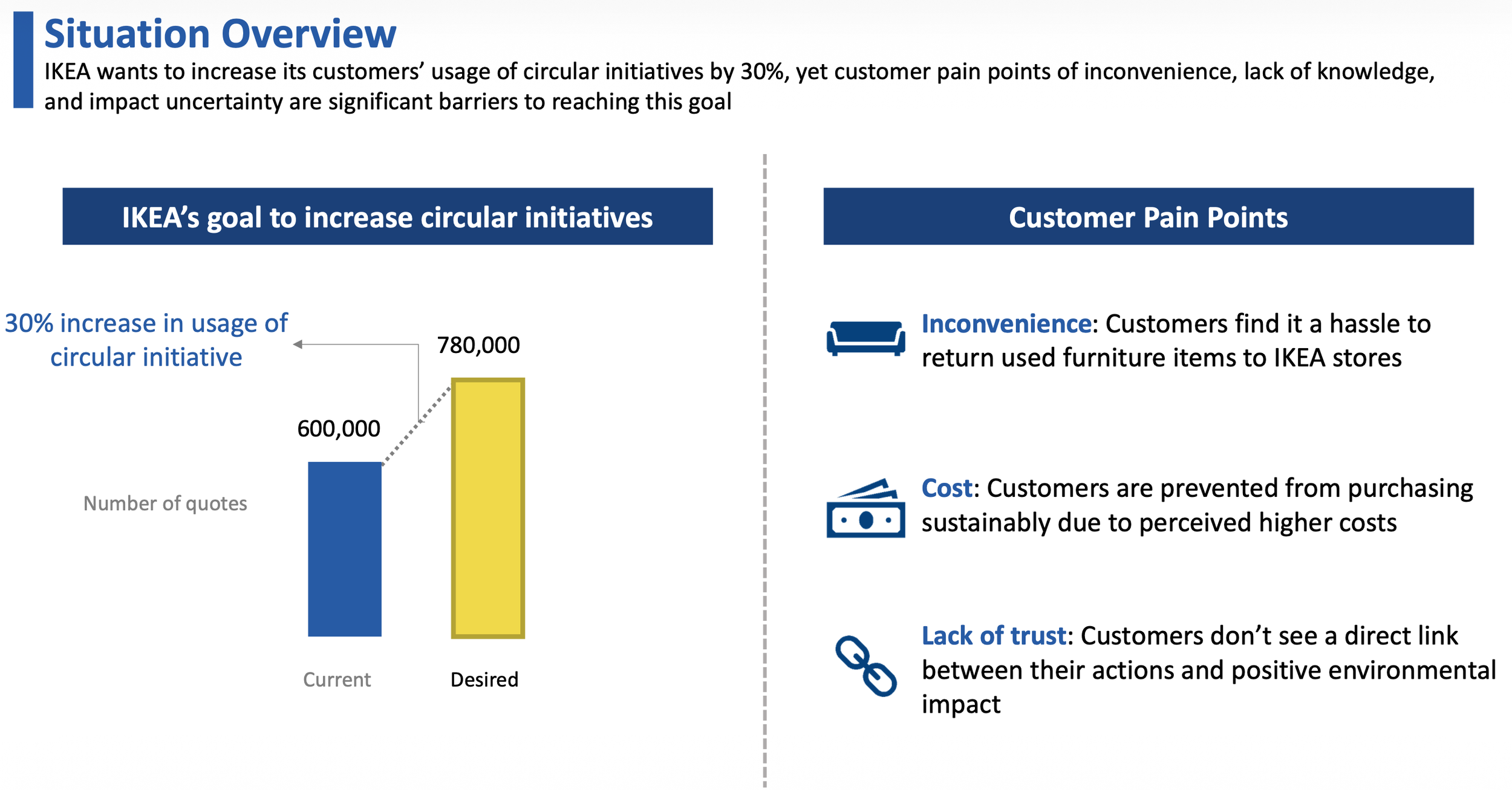
IKEA aims to increase the use of its circular initiatives but faces significant customer barriers:
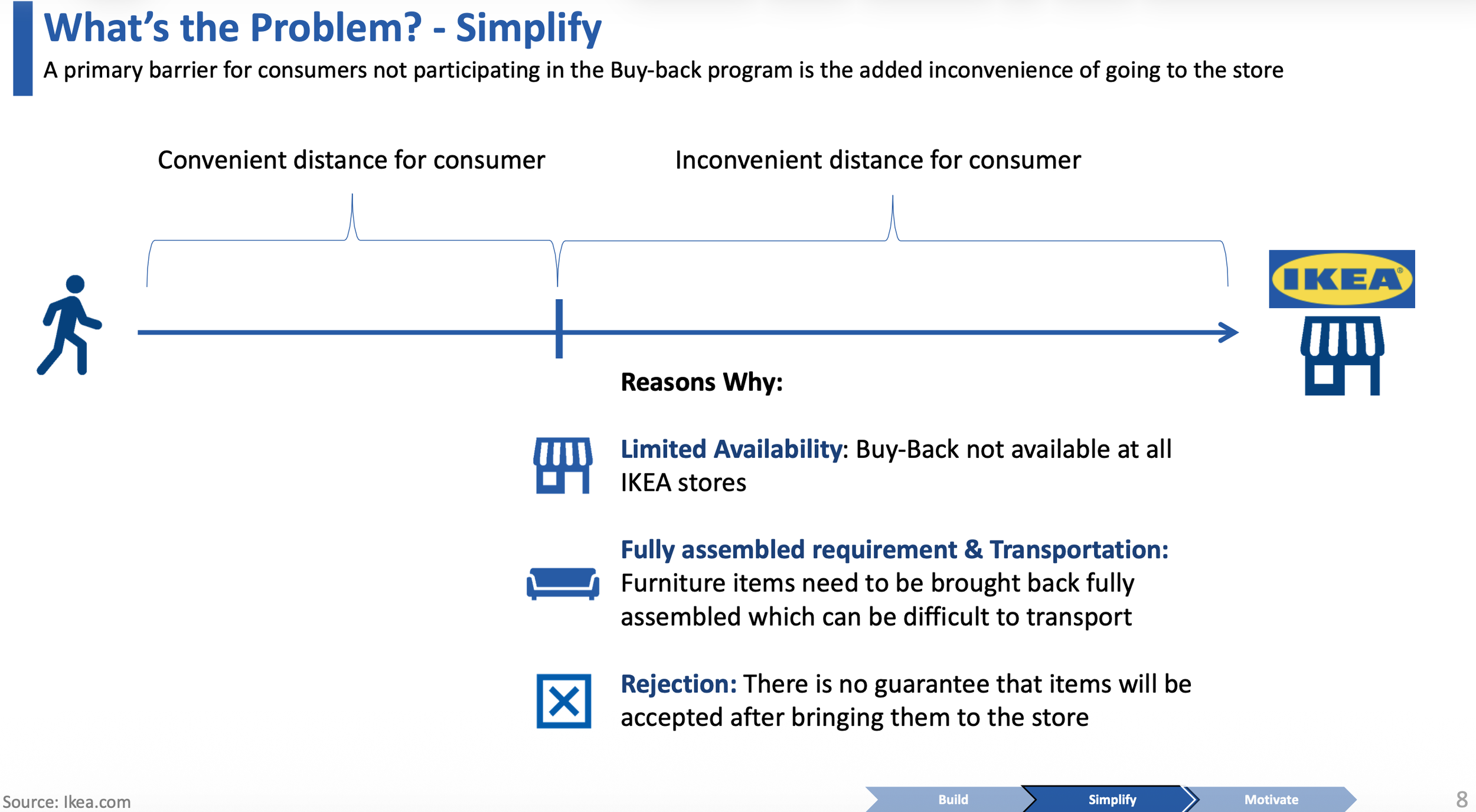
Inconvenience: Returning fully assembled furniture is difficult and time-consuming.
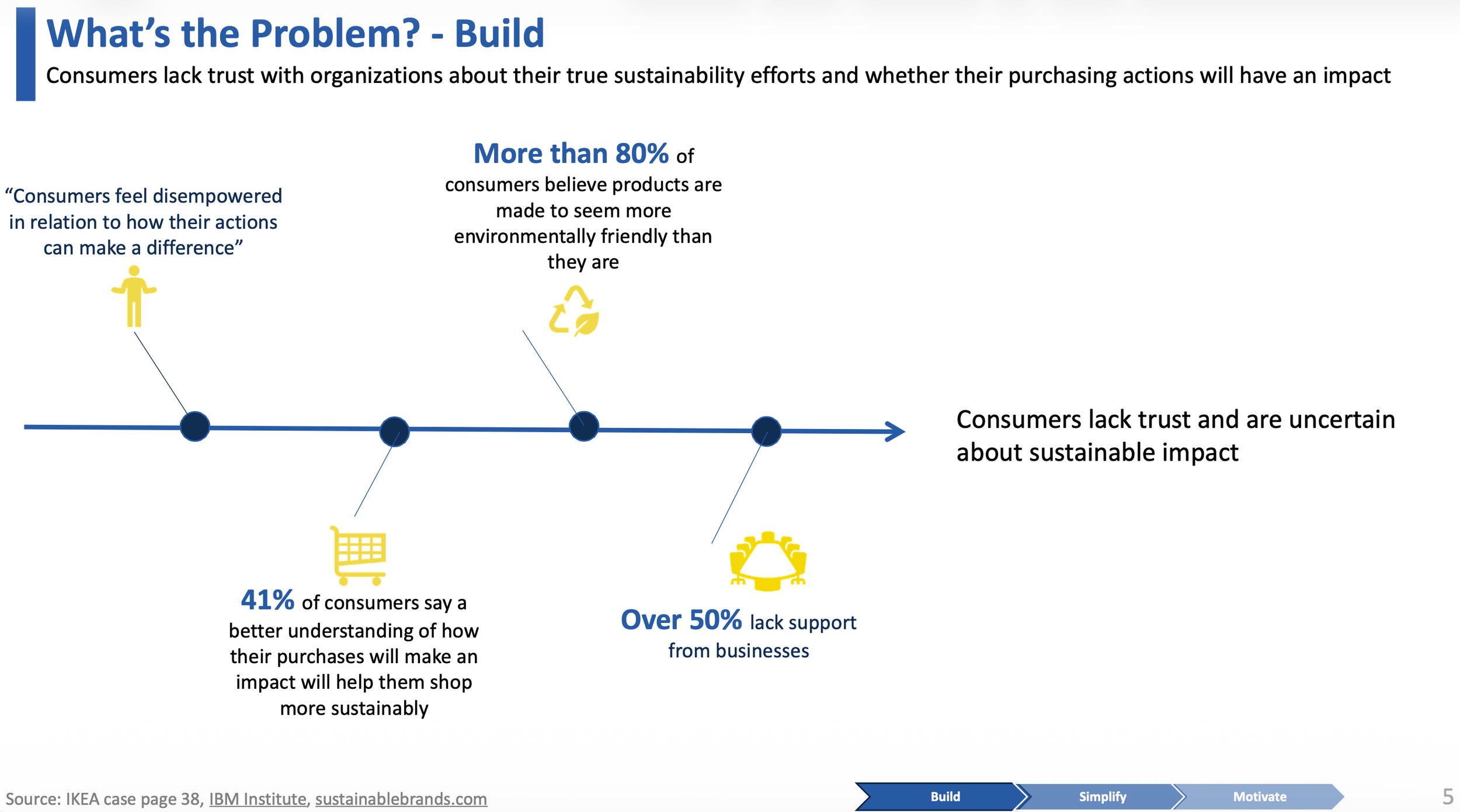
Lack of Trust: Many consumers are skeptical of sustainability claims and uncertain about the impact of their actions.
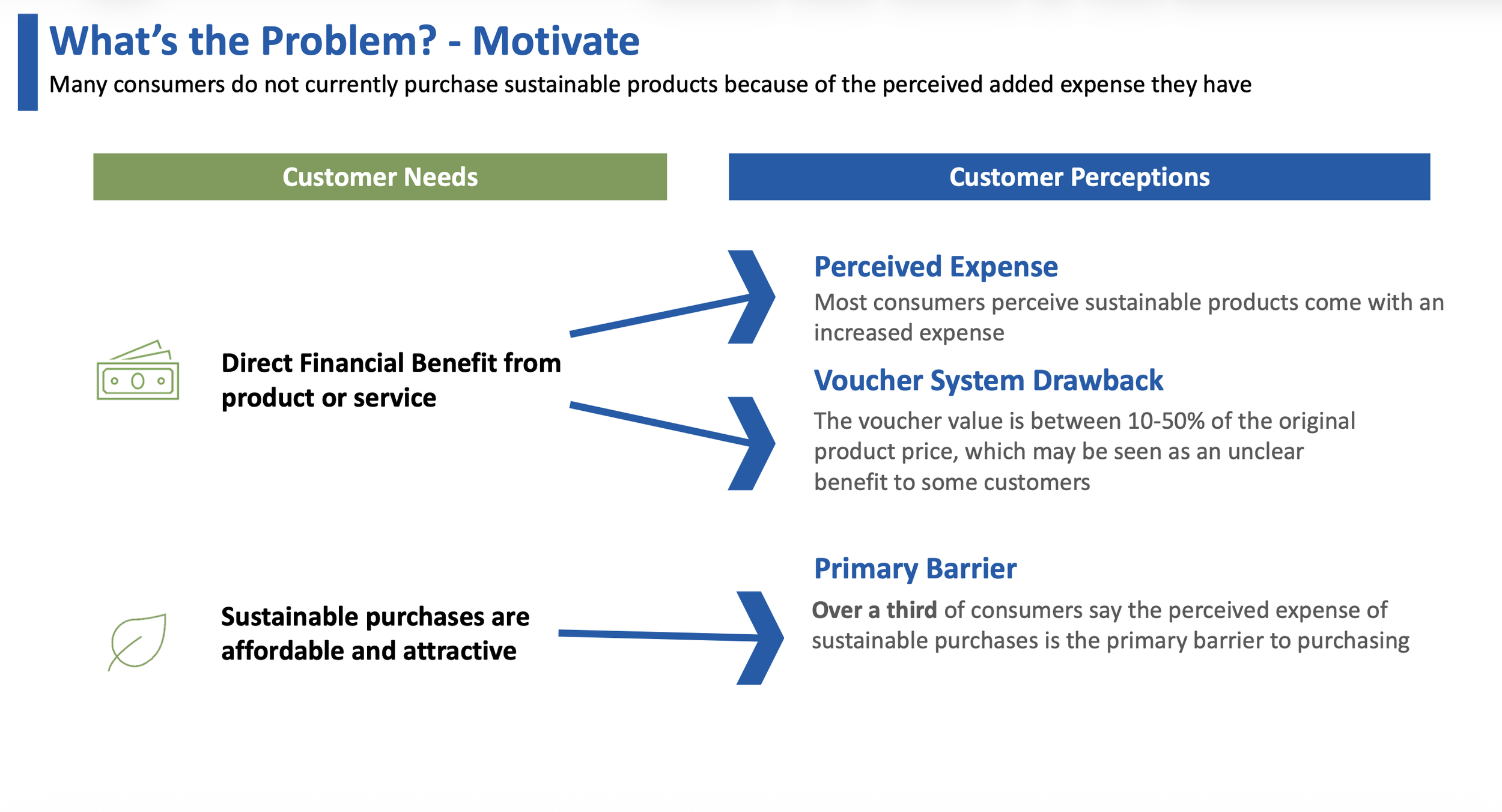
Cost Concerns: Sustainable purchases are often perceived as more expensive, and voucher values within the Buy-back Program feel unclear to customers.
These issues limit IKEA’s ability to scale its circularity goals despite high customer interest.
Key Insight
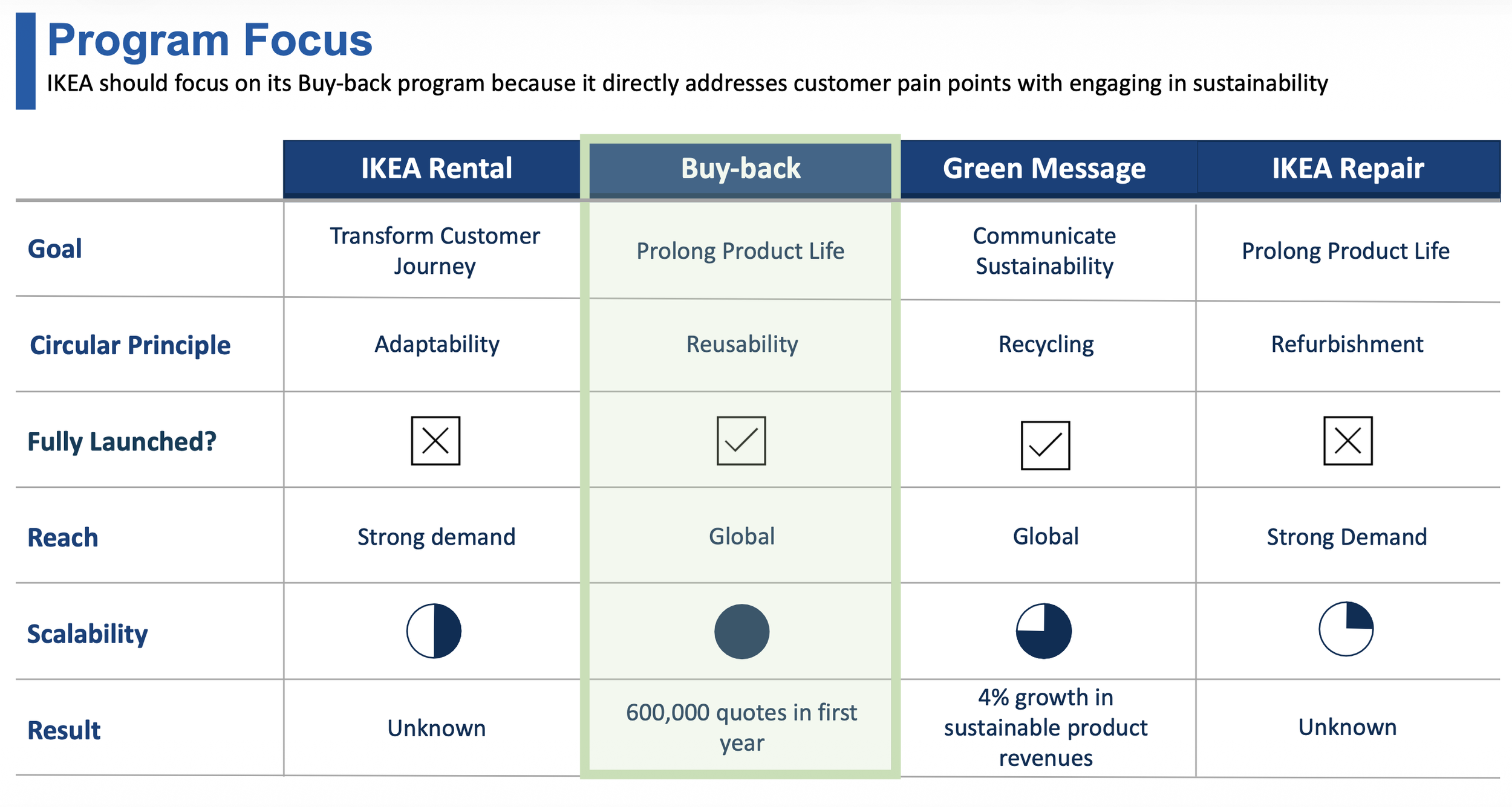
Among all circular initiatives, the Buy-back Program had the clearest customer value proposition and strongest demand signals, yet required strategic expansion and redesign to reach IKEA’s customer participation goals.
This became the focal point of our recommendation.
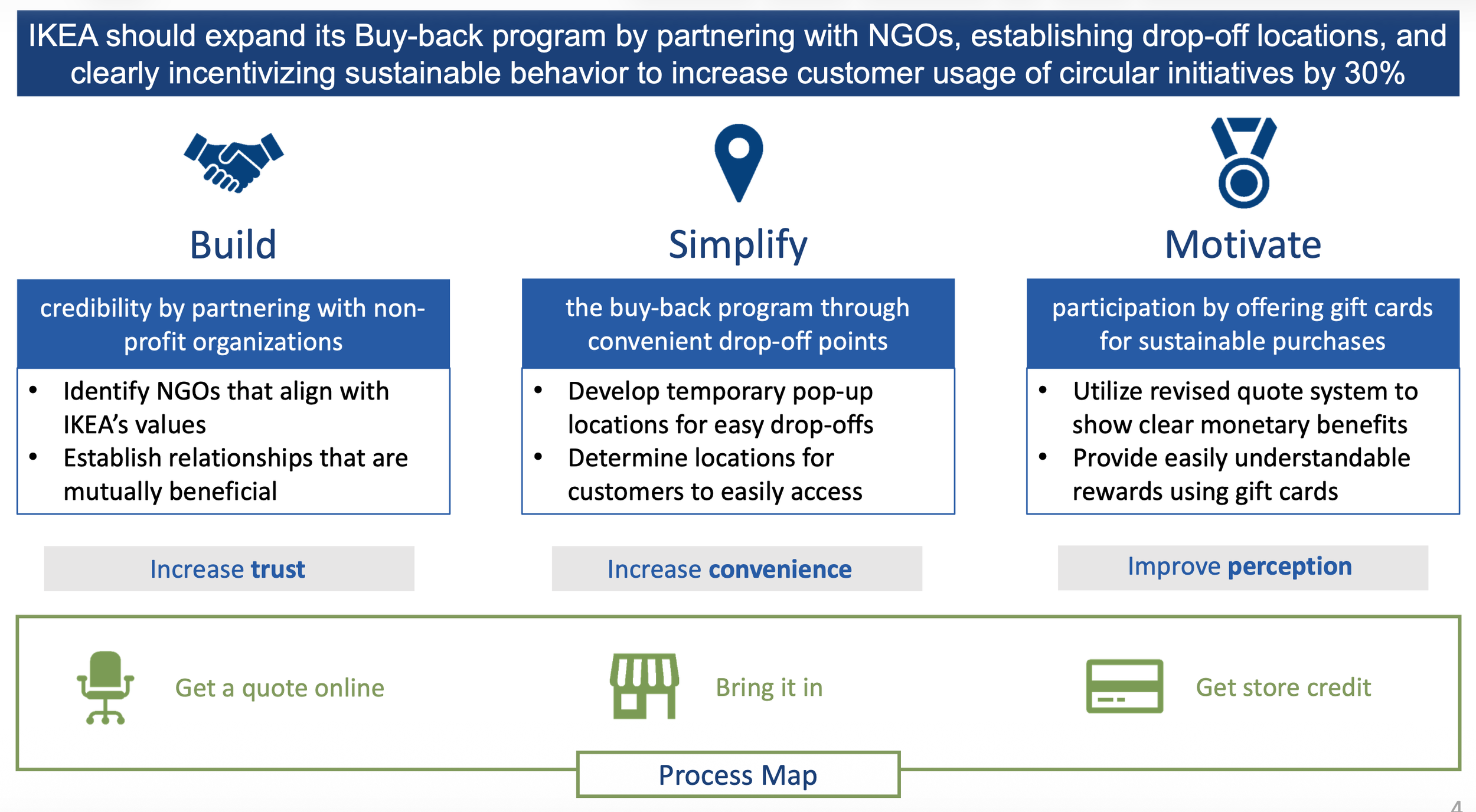
Our Solution: Build • Simplify • Motivate
We crafted a three-pillar strategy targeting core customer pain points while enabling nationwide scalability.
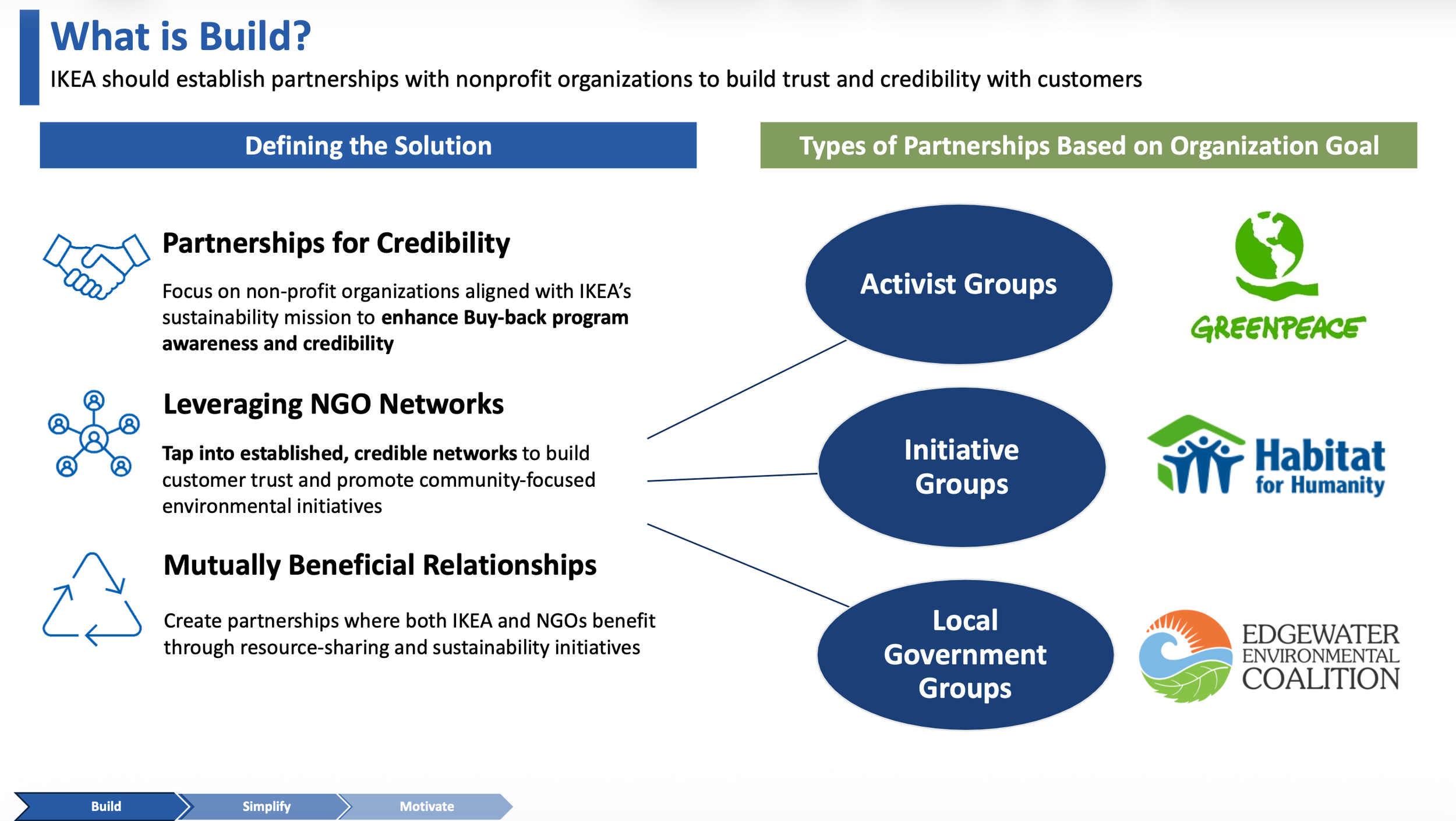
1. Build: Strengthen Trust Through NGO Partnerships
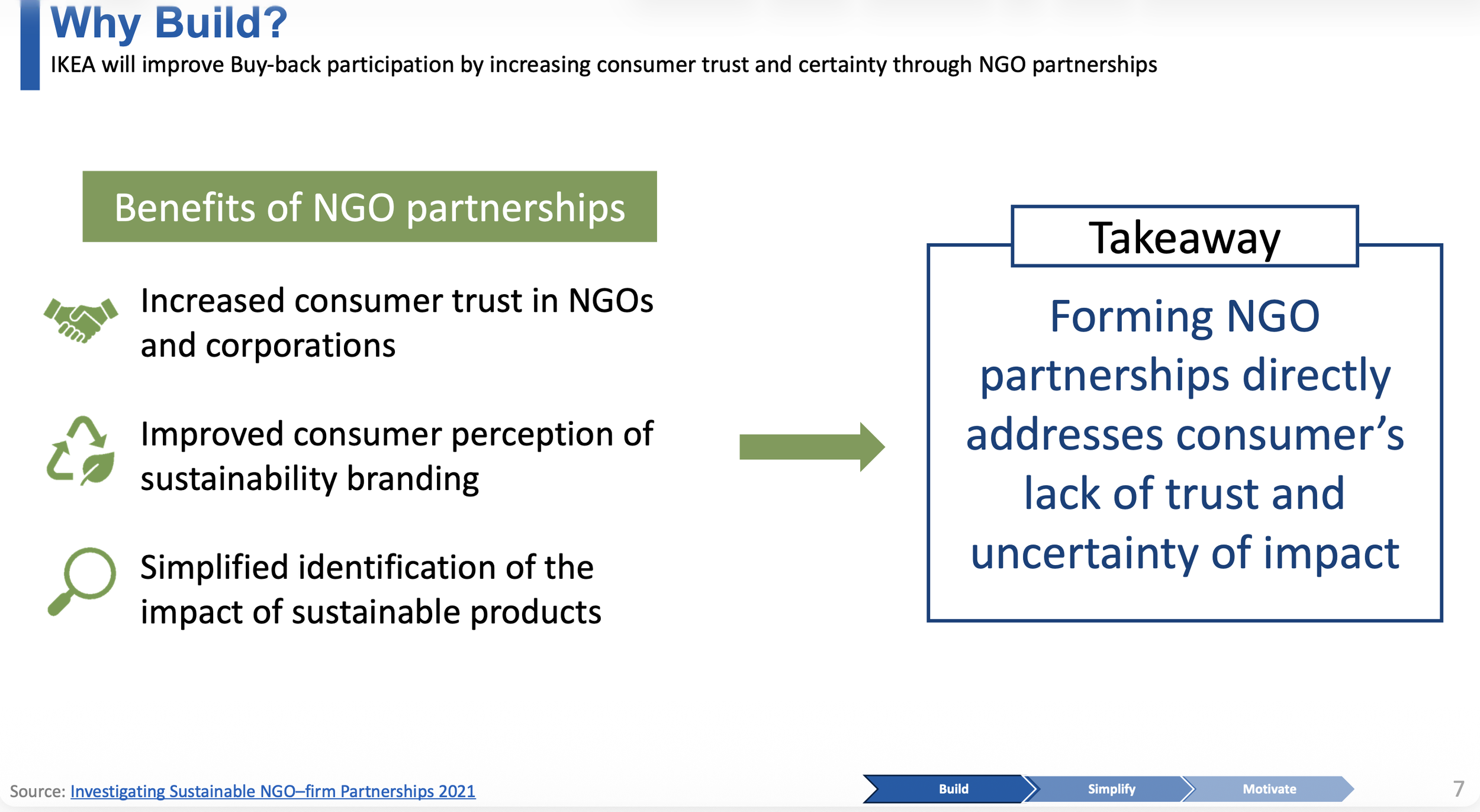
Consumers distrust corporate sustainability messaging—but trust environmental nonprofits.
We recommended that IKEA partner with credible NGOs (e.g., Habitat for Humanity, Goodwill, Greenpeace) to:
Co-market the Buy-back Program
Share resources and recycling infrastructure
Demonstrate transparent environmental impact
Increase community visibility and credibility
Impact: Higher consumer confidence and reframing Buy-back as a mission-driven program rather than a transactional one.
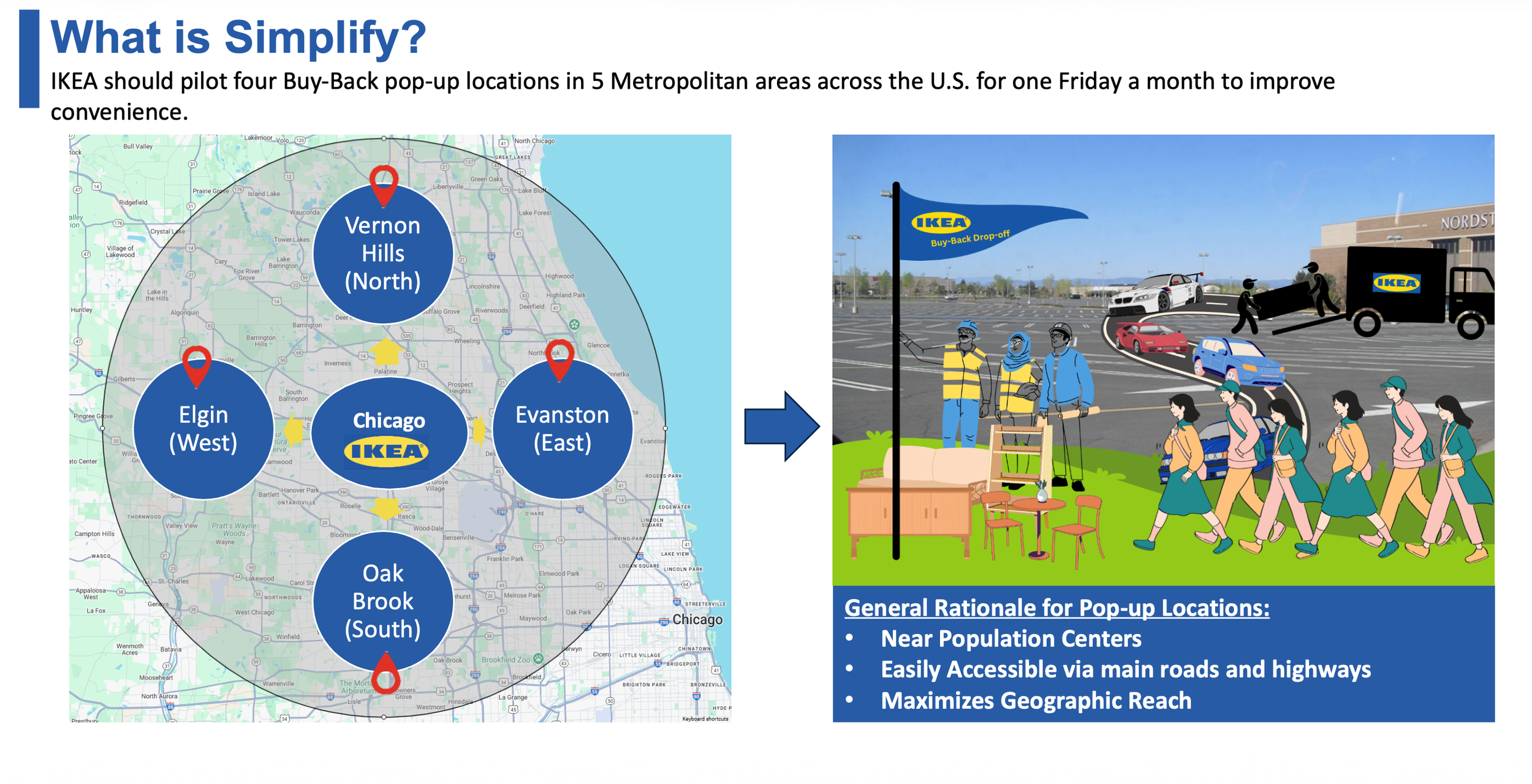
2. Simplify: Expand Access Through Monthly Pop-Up Drop-Off Sites
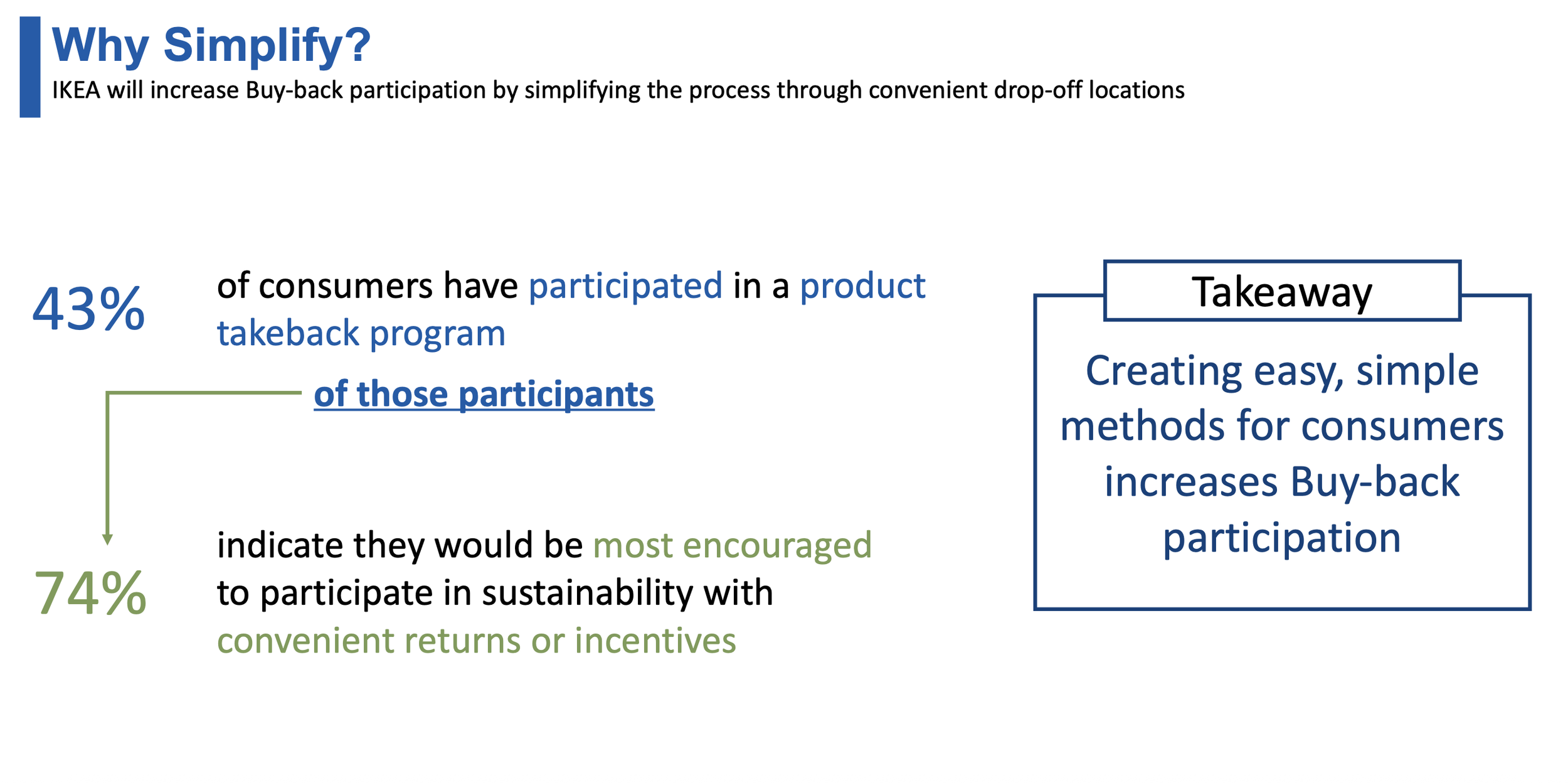
Convenience is the largest barrier to participation. We proposed a pilot network of monthly Buy-back pop-up locationsacross five major U.S. metro areas.
Example city model:
4 pop-up sites within a metro (North, South, East, West)
Located in high-traffic venues (malls, community centers, retail parking lots)
Operate one Friday per month
Impact: Eliminates transportation barriers, expands geographic reach, and normalizes sustainable disposal behavior.
3. Motivate: Make Rewards Clear and Valuable
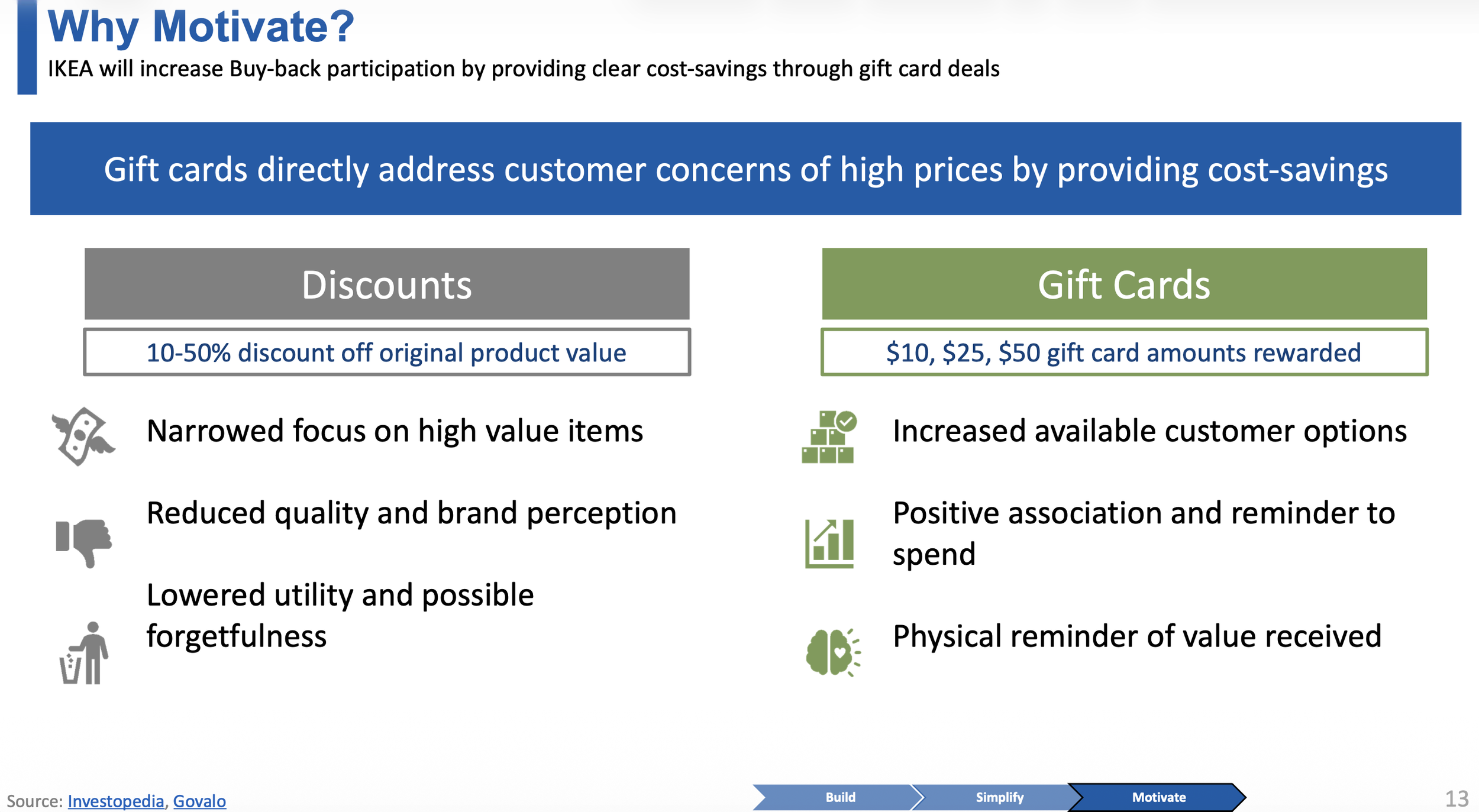
The existing percentage-based voucher system was confusing and inconsistent.
We redesigned the incentive structure to:
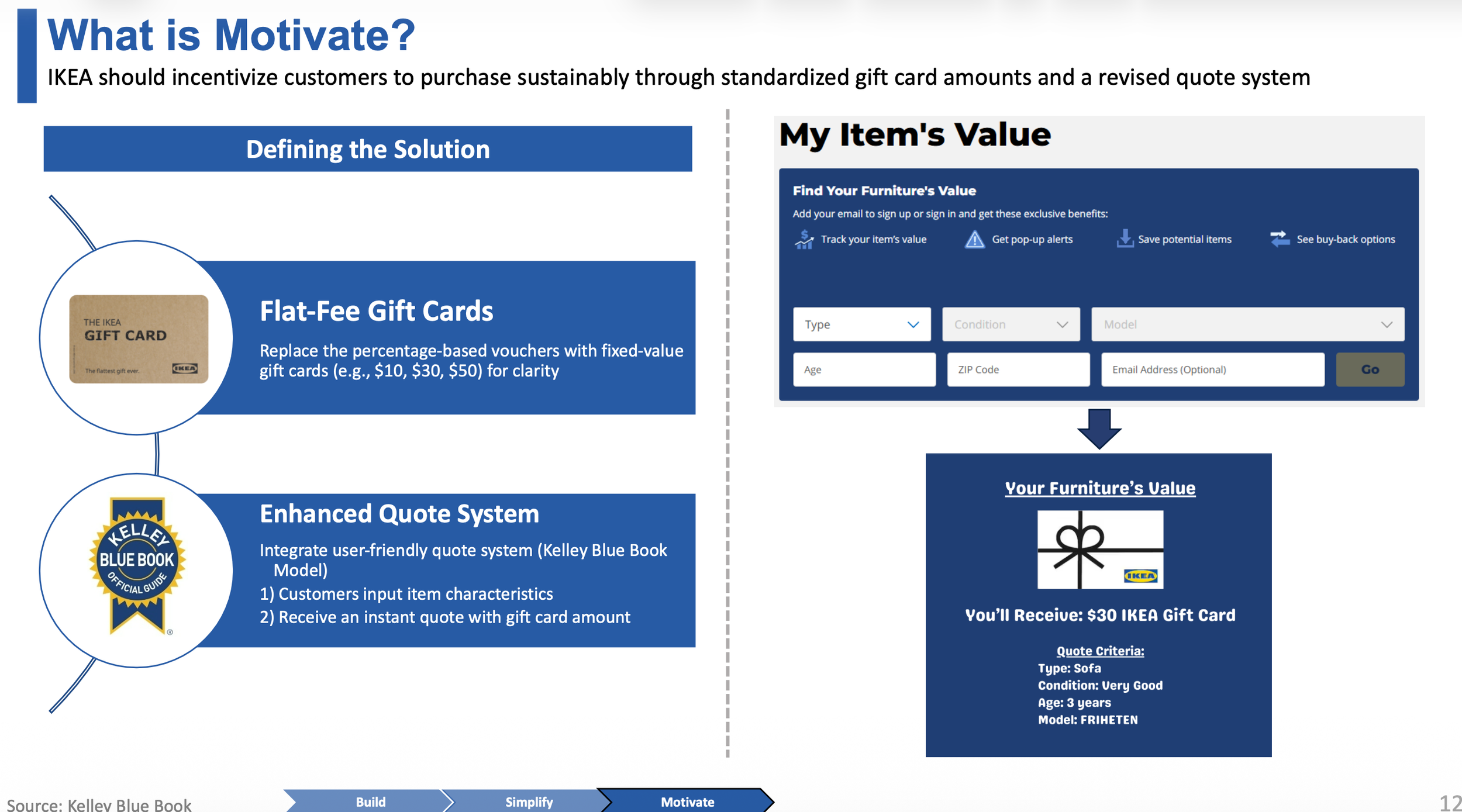
Replace variable vouchers with flat-fee gift cards ($10, $30, $50)
Introduce a Kelley Blue Book–style instant quote tool to show clear value
Provide a memorable physical or digital reward that prompts repeat purchases
Impact: Customers clearly understand the value of participating and view Buy-back as a smart financial choice—not a premium sustainability tradeoff.
Financial Impact & Validation
We conducted a break-even analysis using case-provided metrics:
Value per user: $74
Estimated implementation cost: $1.35M–$3.5M
Break-even volume:
Low end: 18,257 new users
High end: 47,298 new users
IKEA’s goal: 180,000 new users
Our recommendation achieves profitability and exceeds target growth under realistic adoption scenarios.
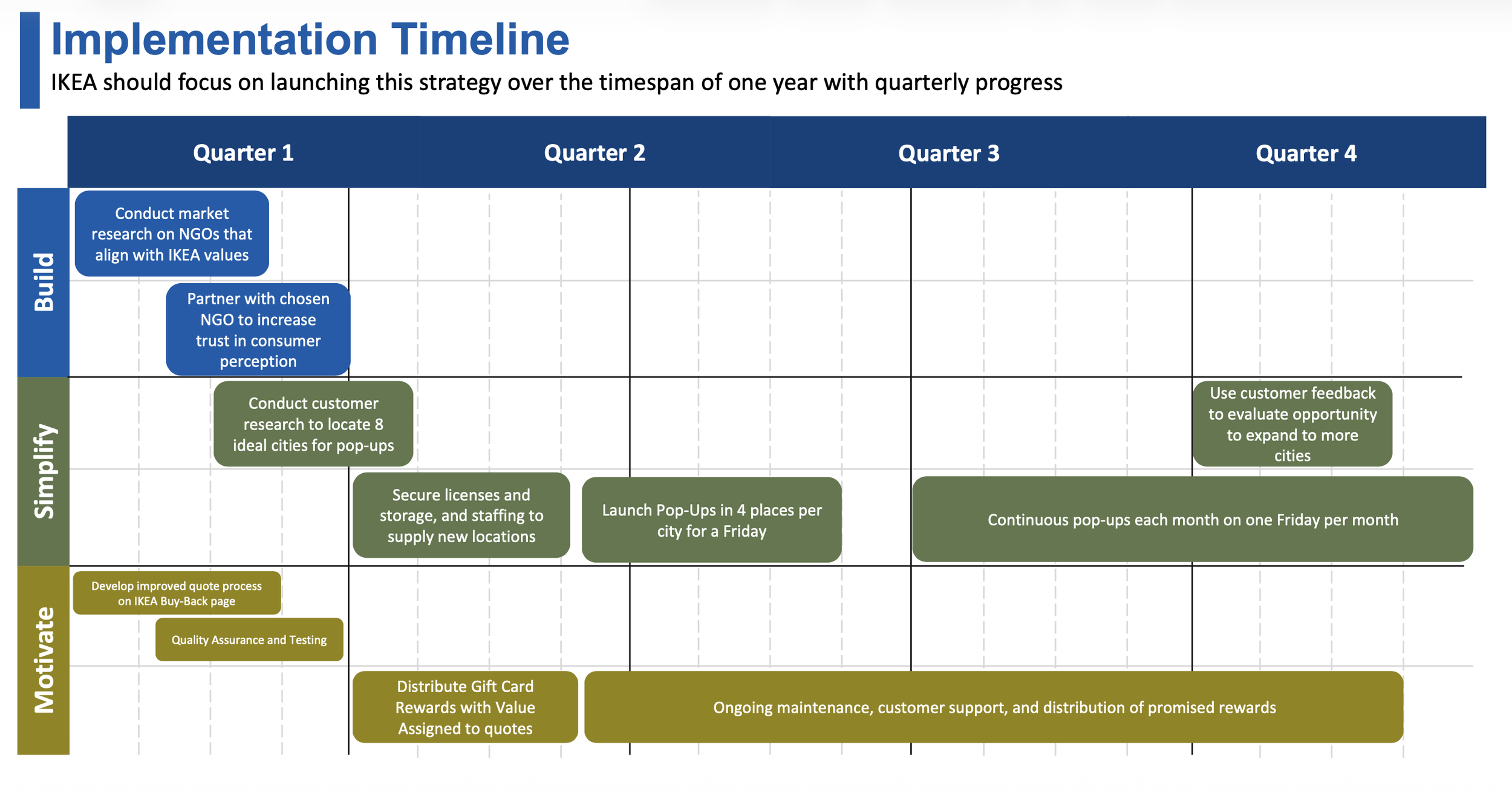
Implementation Roadmap
We developed a 12-month, phased execution plan:
Quarter 1
Research and select NGO partners
Identify target cities and pop-up regions
Quarter 2
Secure permits, locations, tech updates, and staffing
Build improved Buy-back quote interface
Quarter 3
Launch pilot pop-up sites
Launch revised gift-card model
Quarter 4
Evaluate pilot data, expand to additional cities
Maintain partnerships, scale marketing efforts
My Contributions
Throughout the project, I drove key components from both the strategic and analytical sides:
Led customer insight synthesis to identify trust, convenience, and cost barriers
Designed the Motivate pillar, including the flat-fee gift card system and quote-tool redesign
Conducted the financial break-even model, quantifying required user growth
Developed storytelling structure for the final presentation
Supported pop-up location logic and market-selection criteria
Helped craft the customer-journey redesign and end-to-end solution narrative
Outcome
Our solution built a holistic, customer-centered circularity strategy that:
✔ Improves the Buy-back experience end-to-end
✔ Addresses customer psychological barriers
✔ Integrates community partners to build trust
✔ Drives measurable, financially sustainable growth
The final recommendation was well-received for its clarity, creativity, and scalability—mirroring the structured problem-solving used in top consulting firms.